Running a restaurant in South Carolina means operating in one of the most insurance-intensive business environments in the country. The state's tourism-driven economy concentrates foot traffic in coastal markets like Myrtle Beach and Charleston. South Carolina's 2026 liquor liability law tightened requirements for restaurants and bars that serve alcohol on-premises after 5 PM. And the coastal weather risk — hurricanes, flooding, and the business interruption that follows both — creates exposure that inland restaurant operators simply don't face.
Getting the right insurance package for a South Carolina restaurant isn't just a legal obligation. It's the financial foundation that determines whether your business survives a serious claim, a storm closure, or a lawsuit.
Why restaurant insurance is critical in SC's tourism economy
South Carolina welcomed over 37 million visitors in 2024, according to the South Carolina Department of Parks, Recreation and Tourism. Myrtle Beach alone draws over 14 million visitors annually. That volume of unfamiliar customers in your space — navigating crowded rooms, unfamiliar wet surfaces during rain events, and the chaos of peak summer service — creates liability exposure that exceeds what equivalent restaurants face in non-tourist markets.
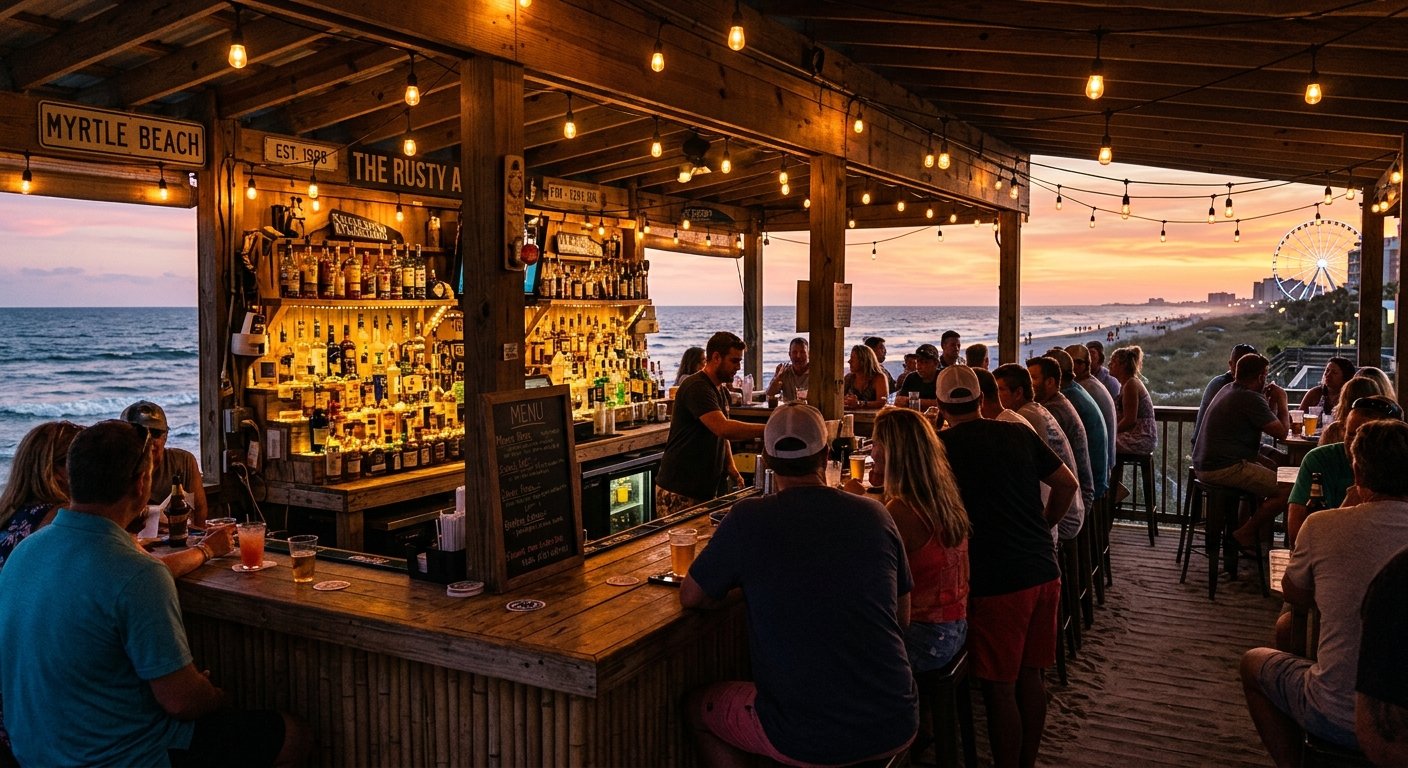
The Myrtle Beach restaurant row along Kings Highway, the seafood restaurants in Murrells Inlet, the oceanfront dining along the Grand Strand — these businesses face foot traffic during peak season that's fundamentally different from the same restaurant at 40% capacity in January. Insurers price that tourist season exposure into coastal restaurant rates.
Beyond the liability risk from customers, coastal South Carolina restaurants face the genuine possibility of hurricane-related closure. A direct hit or significant tropical storm can close a restaurant for days to weeks during what might be the most important revenue period of the year. Business interruption coverage — which pays your fixed expenses during a covered closure — is the coverage that determines whether a restaurant can survive that disruption financially.
Essential coverage types for SC restaurants
General liability insurance
covers bodily injury claims from customers (slip-and-fall on a wet floor, a customer burned by hot food), property damage you cause to others, and personal and advertising injury claims. For a Myrtle Beach restaurant handling hundreds of covers per day during peak season, GL is the most used coverage in your entire program. Minimum $1 million per occurrence is the standard, with many commercial lease agreements requiring this as a condition of tenancy.
Commercial property insurance
covers your building (if you own it), kitchen equipment, furniture, inventory, and business property against fire, theft, wind, and other covered perils. For coastal South Carolina restaurants, the wind and named-storm terms in your commercial property policy deserve careful review. Hurricane wind damage to a restaurant during peak season represents a complete loss of the building and all its revenue-generating capacity simultaneously.
Business interruption insurance
pays your ongoing fixed costs — rent, payroll, utilities, loan payments — when a covered event forces a temporary closure. For a Myrtle Beach restaurant that generates 60% of its annual revenue between Memorial Day and Labor Day, being closed for three weeks in July due to hurricane damage is an existential financial event without business interruption coverage. Most business owner's policies include this coverage, but the limits need to reflect your actual revenue and expense structure.
Liquor liability insurance
has been legally required in South Carolina since January 1, 2026. Under SC Code Section 61-2-145, any business licensed to sell alcohol for on-premises consumption that stays open after 5 PM must carry a liquor liability policy with a minimum $1 million in total aggregate coverage, with per-occurrence limits of at least $500,000. Failing to maintain this coverage is grounds for suspension or revocation of your alcohol license. The $1 million requirement can be reduced — stopping alcohol service by midnight reduces it by $250,000, having all staff complete alcohol-server training within 60 days of hire reduces it by $100,000, and keeping alcohol under 40% of total sales reduces it by another $100,000.
Workers' compensation
is required for South Carolina restaurants with four or more employees, including part-time workers and family members. Restaurant workers face real injury risks — burns, cuts, slip-and-fall injuries in kitchen environments — and the cost of an uninsured workers' comp claim can reach well into five figures. The maximum weekly compensation benefit in South Carolina is $1,134.43 as of 2025, and you are personally liable for that cost if you're operating without required coverage.
Liquor liability and special risks
South Carolina's dram shop statute (Section 61-2-145) creates liability for serving alcohol to visibly intoxicated patrons or minors. The tourist market creates specific exposure here — out-of-state visitors unfamiliar with their tolerance, large groups celebrating events, and late-night service during peak season all increase the statistical risk of a claim. An overserved patron who causes an accident after leaving your restaurant can generate a claim that goes directly to your liquor liability policy.
The January 2026 law change is worth understanding precisely because it affects the calculations. The baseline $1 million requirement is the starting point, and the risk mitigation credits reduce it. An independent insurance agent familiar with South Carolina's hospitality market can help you structure your coverage around these requirements without overpaying for limits you're not legally required to carry.
Average costs for restaurant insurance
Restaurant insurance in South Carolina typically costs between $3,000 and $10,000 per year for a comprehensive package, according to Latent Insurance's 2026 South Carolina analysis. Coastal restaurants in Myrtle Beach and Murrells Inlet generally pay toward the higher end of that range because of hurricane and flood exposure. Smaller cafes or family-owned diners with limited alcohol service and lower revenue pay toward the lower end.
Liquor liability alone typically adds $400 to $1,200 per year for restaurants and $1,200 to $3,000 for bars and nightclubs with higher alcohol volume and later hours. Workers' compensation for restaurant staff runs approximately $1.30 to $2.50 per $100 of payroll depending on the specific job classifications in your kitchen and front-of-house.
A BOP (business owner's policy) that bundles GL, commercial property, and business interruption is typically the most cost-efficient starting structure for South Carolina restaurants that qualify. The BOP is then supplemented with liquor liability, workers' comp, and any endorsements specific to your operation.
Get a customized restaurant insurance quote
Moore & Associates works with South Carolina restaurant owners across the Grand Strand to build insurance programs that fit their specific operations and satisfy the state's 2026 liquor liability requirements. For a free quote on hospitality and commercial insurance, call (843) 839-5076 or contact us online. We serve Myrtle Beach, North Myrtle Beach, Murrells Inlet, Surfside Beach, Conway, Pawleys Island, Litchfield, and Georgetown.