Homeowners insurance in Pawleys Island, SC: what coastal ownership really means
Pawleys Island is one of the oldest beach resorts on the East Coast, and it still carries the unhurried, low-key character that draws buyers from across the country. But owning a home here, whether it sits on the oceanfront, backs up to the marsh, or rests on a quiet interior lot, means facing insurance challenges that most inland homeowners never encounter. Homeowners insurance in Pawleys Island, SC is not simply a checkbox at closing. It is an ongoing financial strategy that has to account for hurricanes, flooding, wind-driven rain, and a coastal property market where replacement costs are rising faster than most people expect.
Why Pawleys Island homes face unique insurance pressure
Georgetown County, where Pawleys Island sits, is classified as a high-risk coastal zone under both state and federal guidelines. That designation shapes how carriers price and write coverage here.
A few factors drive that pressure more than others:
- Hurricane and tropical storm exposure. The Grand Strand sits directly in the path of storms that form in the Atlantic and Gulf. Since 1990, major storms including Hugo, Floyd, and Dorian have all delivered meaningful wind and surge damage to the Pawleys Island area.
- Flood zone classifications. A large share of Pawleys Island properties fall into FEMA Special Flood Hazard Areas (Zone AE or VE). Zone VE, which covers many oceanfront and near-oceanfront lots, carries the highest actuarial flood risk of any designation because it accounts for wave action on top of inundation depth.
- Salt air corrosion. Constant salt air accelerates deterioration of roofing materials, HVAC systems, window frames, and structural fasteners. Carriers factor this into their underwriting and pricing.
- Elevated replacement costs. Construction labor and materials on the coast run higher than inland. A modest 1,800-square-foot beach cottage can carry a replacement cost of $350,000 to $500,000 or more, depending on finishes and lot access, even when its market value looks different on paper.
None of this means insurance is unavailable, but the coverage you buy here has to be assembled more carefully than a standard inland policy.
What a standard homeowners policy covers, and what it leaves out
A standard HO-3 homeowners policy covers your dwelling structure, other structures on the property, personal belongings, loss of use (additional living expenses while your home is being repaired), and personal liability. For most non-coastal homes, that framework works reasonably well.
On Pawleys Island, the gaps in a standard policy are significant enough to cause serious financial harm after a major event.
Wind coverage and named-storm deductibles
South Carolina allows carriers to apply a separate, percentage-based deductible for hurricane or named-storm losses rather than a flat dollar deductible. These deductibles typically range from 1% to 5% of the insured dwelling value . On a home insured for $400,000, a 2% named-storm deductible means you absorb the first $8,000 of any hurricane wind loss out of pocket before coverage applies. Some policies in high-wind coastal tiers use even higher percentages. Knowing your deductible structure before a storm, not after, is essential.
Flood is always a separate policy
This is the most common misunderstanding among first-time coastal buyers. Standard homeowners policies do not cover flood damage . That includes storm surge, which is often the most destructive element of a hurricane. Flood coverage on Pawleys Island must come from either the National Flood Insurance Program (NFIP) through FEMA or from a private flood carrier. NFIP policies cap building coverage at $250,000 and contents at $100,000, which is often not enough for a coastal property. Private flood markets have stepped in with higher limits and, in some cases, more flexible terms. For a detailed look at costs and requirements, the post on flood insurance in South Carolina covers both thoroughly.
Actual cash value vs. replacement cost
Policies that pay claims on an actual cash value (ACV) basis deduct depreciation from your payout. On a coastal home with a ten-year-old roof, that depreciation can be substantial. Paying a modest premium increase to get replacement cost coverage on your dwelling and personal property closes that gap and protects you from a large out-of-pocket hit after a loss.
Coverage types worth adding for Pawleys Island homeowners
Beyond the base policy structure, several additional coverages deserve attention for property owners in this area.
Flood insurance
If your property sits in a Special Flood Hazard Area, your mortgage lender legally requires you to carry flood insurance. If you own free and clear, it is still one of the soundest financial decisions a coastal homeowner can make. NFIP policies have a standard 30-day waiting period before coverage takes effect, so buying or renewing at the last minute before hurricane season is not a workable plan.
Hurricane or windstorm coverage review
Some standard carriers in South Carolina exclude windstorm entirely from coastal properties and require a separate wind policy through the South Carolina Wind and Hail Underwriting Association (the "Beach Plan"). Others include wind but with the percentage deductibles described above. Knowing which situation applies to your policy is not optional. An independent agent can clarify this quickly; a homeowner who finds out at claim time can face a serious gap.
Ordinance or law coverage
Georgetown County and state building codes have changed significantly since many older Pawleys Island homes were built. If a storm damages your home beyond a certain threshold (often 50% of market value under local ordinance), you may be required to bring the entire structure up to current code before rebuilding. Standard policies cover repairing what was there. Ordinance or law coverage pays the additional cost to meet current code requirements, which can add tens of thousands of dollars to a rebuild.
Personal umbrella liability
Coastal properties, especially those rented short-term or used for gatherings, carry higher liability exposure than a typical single-family home. A personal umbrella policy adds $1 million to $5 million in liability coverage above your homeowners and auto limits for a relatively modest annual premium, usually a few hundred dollars. For a home on Pawleys Island where guests may be using docks, pools, or beach access, that extra layer matters.
Scheduled personal property
Many Pawleys Island homeowners have invested in high-end furnishings, artwork, or jewelry. Standard personal property coverage carries sub-limits for categories like jewelry (often $1,500 or less) and applies depreciation. Scheduling valuable items individually covers their full appraised value and typically removes deductibles for those specific items.
Short-term rentals add another layer of complexity
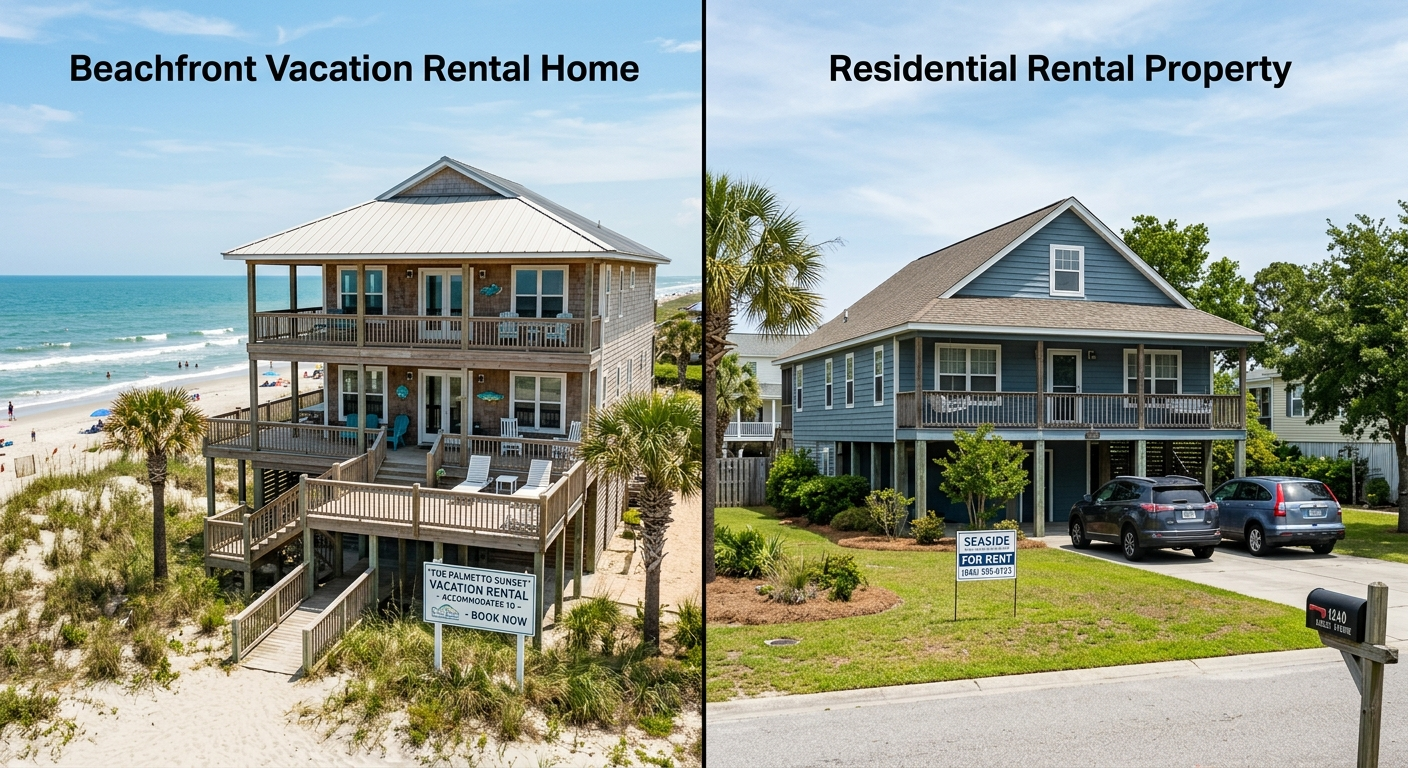
Pawleys Island has a strong vacation rental market, and many homeowners offset carrying costs by renting through platforms like Airbnb and VRBO. A standard homeowners policy is written for owner-occupied or occasionally rented properties. When you rent regularly, that coverage can be voided or significantly limited.
If you rent your Pawleys Island property to guests even a few weeks per year, you need to be transparent with your carrier or work with an agent who can find a policy that explicitly covers short-term rental activity. Some carriers offer endorsements that extend coverage for limited rental periods. Others require a separate short-term rental policy entirely. The stakes are real: a guest injury or a rental-period fire on an improperly covered property can result in a denied claim at the worst possible moment.
How to think about replacement cost and coverage limits
One of the most common mistakes coastal homeowners make is insuring their home for its purchase price or tax-assessed value rather than its actual replacement cost. The market value of a Pawleys Island lot includes the land, the view, the location, and current real estate conditions. None of those factors appear in a claim settlement. The carrier pays to rebuild the structure, and that calculation is based on current construction costs.
A professional replacement cost estimator (most reputable carriers use one at underwriting) looks at square footage, construction type, roofing material, interior finishes, and local labor rates. On the coast, those numbers are almost always higher than homeowners initially expect. Being underinsured by $100,000 or more is not unusual for older Pawleys Island homes that have been renovated or that owners have not revalued in several years.
Ask your agent to run a current replacement cost estimate when your policy renews. If your dwelling limit has not been reviewed in three or more years, it is worth doing before hurricane season rather than after a loss.
For a broader look at how homeowners coverage works across the South Carolina coast, the complete guide to homeowners insurance on the South Carolina coast is a useful starting point for understanding the full picture.
What affects the cost of homeowners insurance on Pawleys Island
Rates vary considerably based on property-specific and policy-specific factors. Understanding what drives your premium helps you make smarter decisions at renewal and when comparing carriers.
- Distance to the ocean. Properties within a few hundred feet of the oceanfront pay the highest wind and coastal premiums. Moving inland by even a quarter mile can produce meaningfully lower rates.
- Flood zone designation. Zone VE properties face higher NFIP premiums than Zone AE properties, which in turn cost more than Zone X (moderate or minimal risk) properties.
- Roof age and type. A newer roof, especially one with impact-resistant shingles or a sealed roof deck, can qualify for meaningful discounts. Many carriers in South Carolina now require roof inspections for homes with roofs over 15 to 20 years old and may non-renew policies with older roofs.
- Wind mitigation features. Hurricane straps, impact-resistant windows, and reinforced garage doors reduce your risk profile and often produce credits on your premium. A formal wind mitigation inspection by a licensed inspector documents these features for your carrier.
- Claims history. Both your personal claims history and the property's claims history (visible through the CLUE report) affect pricing. Multiple prior claims can make a property difficult to insure in the standard market.
- Coverage limits and deductibles. Higher dwelling limits cost more; higher deductibles cost less. The right balance depends on your financial ability to absorb a deductible after a storm.
Working with an independent agent on the Pawleys Island coast
Coastal insurance on South Carolina's Grand Strand is not a commodity product you can piece together from a comparison website. The combination of wind, flood, ordinance, and liability exposures specific to Pawleys Island means the policy structure matters as much as the premium. An agent who only represents one carrier cannot shop the market for you. An independent agent can.
Moore and Associates Insurance is an independent agency serving Pawleys Island and the surrounding Grand Strand communities. Because we are not tied to any single carrier, we compare options across multiple admitted and non-admitted markets to find coverage that fits your property and your budget. That includes carriers who handle coastal homes, short-term rentals, and flood exposures as core business, not as edge cases.
If you own a home on Pawleys Island or are in the process of buying one, we are ready to walk through your coverage options in plain language. You can reach us at (843) 839-5076 or get a quote online and we will put together a comparison built around your specific property. Getting the right coverage in place before a storm develops in the Atlantic is exactly what we are here to help with.
Get A Quote
At Moore & Associates Insurance, securing your future is easy. Ready to protect what matters? Contact us for a quick quote and personalized insurance options!
Kelly
Speak to Kelly 24/7
Microphone ready
Start your custom insurance quote
Instant answers to your insurance questions
Schedule appointments or follow-ups
Personal Insurance
From auto and homeowners to renters and umbrella policies, we help protect your family and property. Let’s find coverage that fits your life.
Commercial Insurance
We customize policies for your industry's risks, like general liability and workers' comp, ensuring you can run your business worry-free.