What dwelling fire insurance covers in South Carolina
Dwelling fire insurance in South Carolina is one of the most practical tools a landlord can have, yet it is often misunderstood or confused with a standard homeowners policy. If you own a house, duplex, or small rental property that you do not live in, a regular HO-3 homeowners policy almost certainly will not cover it. Dwelling fire insurance fills that gap, protecting the physical structure and your financial exposure as a property owner.
A dwelling fire policy covers the building itself against fire, lightning, windstorm, hail, and a range of other named perils. Depending on which form you choose, coverage can be broad or limited:
- DP-1 (basic form) covers only the perils specifically listed in the policy, typically fire, lightning, and internal explosion. It is the most affordable option but offers the narrowest protection.
- DP-2 (broad form) adds perils like vandalism, burglary damage, and falling objects. It is a solid middle-ground choice for many South Carolina landlords.
- DP-3 (special form) covers all perils except those explicitly excluded. This open-peril approach gives landlords the broadest protection and is generally the right choice for properties in higher-risk coastal counties.
Most policies can also be written to include fair rental value coverage , which replaces lost rental income if a covered loss makes the unit uninhabitable. That matters when a single rental property is a meaningful part of your monthly cash flow.
Why a standard homeowners policy falls short for rental properties
South Carolina homeowners policies are underwritten with an important assumption built in: you live in the home. When a property sits vacant or is rented to tenants, the risk profile changes significantly. Carriers can and do deny claims when they discover a property was rented out under a homeowners policy that was never endorsed for rental use.
The gaps show up fast in a real scenario. Imagine a tenant in Myrtle Beach accidentally starts a kitchen fire. The structure sustains $60,000 in damage. If your HO-3 policy excludes coverage for tenant-occupied properties, you are looking at that bill out of pocket. A properly structured dwelling fire policy would respond to that loss.
Beyond fire, South Carolina landlords face a specific set of risks worth understanding:
- Windstorm and hurricane exposure. Horry County, Georgetown County, and the Grand Strand coast sit in direct hurricane paths. A DP-3 policy with windstorm coverage is especially important here.
- Flooding. Dwelling fire policies do NOT cover flood damage. You will need a separate policy through the National Flood Insurance Program (NFIP) or a private flood carrier. This is non-negotiable for properties near the Intracoastal Waterway, Waccamaw River, or tidal areas.
- Vacancy. If a rental sits empty between tenants for more than 30 to 60 days (the threshold varies by carrier), some coverages may suspend automatically. A vacant property policy may be needed to bridge that gap.
Landlord insurance vs. dwelling fire insurance: understanding the difference
These two terms get used interchangeably, and that causes real confusion. Here is the practical distinction:
Dwelling fire insurance refers specifically to the property coverage form (DP-1, DP-2, or DP-3) that covers the structure. It is the foundation of any rental property insurance program.
Landlord insurance (sometimes called a landlord package) bundles that dwelling fire coverage with liability protection and often fair rental value coverage into a single policy. Landlord insurance is dwelling fire coverage plus additional protections wrapped together. You can learn more about how a full landlord policy is structured on the landlord insurance page.
For most South Carolina landlords who own one to four units, a landlord package built on a DP-3 form is the standard recommendation. If you own five or more units, or an apartment complex, you may move into commercial property territory with different underwriting rules entirely.
Coverage options worth adding to your dwelling fire policy
A base dwelling fire policy covers the building. Most landlords should also consider several endorsements or companion policies depending on their situation:
- Personal liability covers you if a tenant or guest is injured on the property and sues. South Carolina courts have found landlords liable for slip-and-fall accidents, unsafe stairs, and similar conditions. Liability limits of at least $300,000 are a reasonable starting point.
- Fair rental value / loss of rents pays your lost rent during the repair period if the property becomes unlivable due to a covered loss. Typical coverage is 10 to 20% of the dwelling limit for up to 12 months.
- Landlord contents coverage applies if you provide appliances, window treatments, or furniture in a furnished rental. Tenant belongings are their responsibility and should be covered under a renters insurance policy, which many South Carolina landlords now require by lease.
- Extended replacement cost pays to rebuild even if construction costs exceed your policy limit. This has been a real issue along the Grand Strand since post-pandemic building cost spikes.
- Flood insurance must be purchased separately. If your rental is in a Special Flood Hazard Area (SFHA), your lender may require it. Even outside mandatory flood zones, South Carolina's coastal and low-lying inland areas flood regularly. More detail is available in our guide to flood insurance costs and requirements in South Carolina.
How South Carolina regulations and the coastal market affect pricing
South Carolina does not set specific premium rates for dwelling fire insurance, but the state's Department of Insurance (SCDOI) does regulate policy forms and carrier practices. What actually drives your premium is a combination of factors specific to this market:
- Location. Properties in coastal counties (Horry, Georgetown, Beaufort, Colleton, Charleston) face higher windstorm premiums. Some carriers apply a separate wind/hail deductible of 1 to 5% of the dwelling's insured value rather than a flat dollar amount.
- Construction type and age. Wood-frame construction built before 2000 costs more to insure than newer concrete block or steel-framed buildings. Post-2000 construction built to updated South Carolina building codes may qualify for discounts.
- Roof condition. Carriers in South Carolina are increasingly scrutinizing roof age and material. A 15-year-old architectural shingle roof on a Myrtle Beach rental will affect your premium and potentially your ability to get coverage at all.
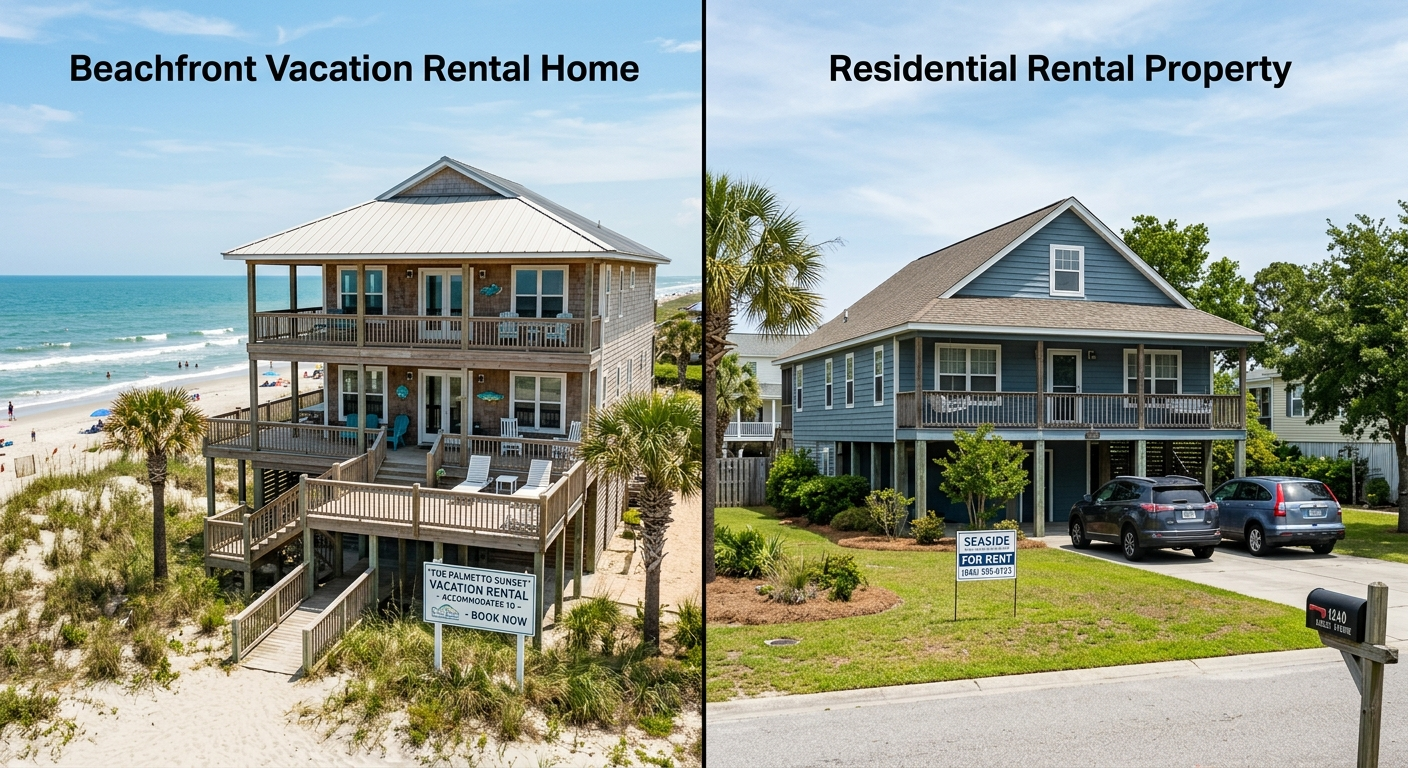
- Tenant type and rental term. Short-term rentals (vacation rentals, Airbnb, VRBO) carry a different risk profile than long-term residential rentals. Many standard dwelling fire carriers exclude short-term rental use entirely. A separate short-term rental policy is required for those properties.
- Claims history. Both your history and the property's prior claims factor into underwriting. South Carolina allows carriers to use CLUE (Comprehensive Loss Underwriting Exchange) reports, which capture claims on a property for up to seven years.
As a rough benchmark, a basic DP-3 policy on a single-family rental home in the Myrtle Beach area often runs between $1,200 and $2,500 per year before windstorm and flood riders. Properties closer to the coast or with older roofs can run higher. Inland properties in areas like Conway or Georgetown tend to come in at the lower end of that range.
Common mistakes South Carolina landlords make with dwelling fire coverage
A few patterns show up repeatedly among rental property owners across the Grand Strand and Lowcountry:
- Insuring at ACV instead of replacement cost. Actual cash value (ACV) pays out what the structure is worth after depreciation, not what it costs to rebuild. On a 30-year-old rental, that gap can be enormous. Most landlords are better served by replacement cost coverage even if the premium is higher.
- Skipping liability coverage. Assuming the tenant is responsible for everything that happens on the property is a costly mistake. As the property owner, you can face lawsuits for conditions you knew or should have known about. Liability coverage is not optional.
- Ignoring flood exposure. South Carolina had significant flooding from Hurricanes Matthew (2016), Florence (2018), and Dorian (2019), and none of those storms had to make direct landfall to cause major inland flooding. If your rental is anywhere near a river, creek, or low-lying area, get a flood quote.
- Not updating coverage after renovations. If you add a deck, finish a basement, or gut-renovate a kitchen, your dwelling limit needs to be updated. Rebuilding to current code with new materials costs far more than the original construction.
- Treating short-term rentals like long-term rentals. Platforms like VRBO and Airbnb provide some host protection, but that is not a substitute for a real insurance policy. If you are renting by the night or by the week, your coverage situation is fundamentally different.
Get the right coverage for your South Carolina rental property
Owning rental property in South Carolina can be a solid investment, but it comes with real exposure that a standard homeowners policy was never designed to handle. Getting the right dwelling fire policy, with the right endorsements, structured for how your property is actually used, makes the difference between a manageable loss and a financial disaster.
Moore and Associates Insurance is an independent agency serving landlords and property owners across the Grand Strand and surrounding communities, including Myrtle Beach, Conway, Pawleys Island, Murrells Inlet, and Georgetown. As an independent agency, we compare rates and coverage options across multiple carriers to find what actually fits your situation, not just what one carrier happens to offer.
If you own a rental property in South Carolina and want to make sure your coverage is structured correctly, get a quote with Moore and Associates Insurance or call us at (843) 839-5076 . We are happy to review what you have and make sure there are no gaps that could cost you down the road.
Get A Quote
At Moore & Associates Insurance, securing your future is easy. Ready to protect what matters? Contact us for a quick quote and personalized insurance options!
Kelly
Speak to Kelly 24/7
Microphone ready
Start your custom insurance quote
Instant answers to your insurance questions
Schedule appointments or follow-ups
Personal Insurance
From auto and homeowners to renters and umbrella policies, we help protect your family and property. Let’s find coverage that fits your life.
Commercial Insurance
We customize policies for your industry's risks, like general liability and workers' comp, ensuring you can run your business worry-free.