
Commercial umbrella vs excess liability in South Carolina: what's the difference?
If you run a business in South Carolina, whether it's a restaurant on the Grand Strand, a construction outfit in Horry County, or a professional services firm in Georgetown, you've probably heard two terms used almost interchangeably: commercial umbrella insurance and excess liability insurance . Both add a layer of protection above your standard policies, but they work differently in ways that matter when a serious claim hits. Understanding how each one works is worth your time before a lawsuit or catastrophic accident forces the question.
What commercial umbrella insurance actually does
A commercial umbrella policy is a true broadening of your liability coverage. It sits above multiple underlying policies at once, things like your general liability, commercial auto, and employer's liability, and it does two things that excess liability alone does not.
First, it raises the limits on each of those underlying policies. If you carry $1 million per occurrence on your general liability and a judgment comes in at $2.5 million , your umbrella steps in to cover the gap (up to its own limit), so you're not writing a check for $1.5 million out of your business account.
Second, a commercial umbrella can sometimes respond to a loss that the underlying policy didn't cover at all. This is called drop-down coverage . If your general liability policy has an exclusion that leaves a gap, the umbrella may drop down and respond directly, depending on how the policy is written. Not every umbrella includes drop-down provisions, but many do, and that flexibility carries real value.
A commercial umbrella also typically covers multiple underlying policies under one policy form. One umbrella, one premium, broader protection across your whole liability picture. You can read more about how these policies are structured on our commercial umbrella coverage page.
What excess liability insurance actually does
Excess liability insurance is simpler and more rigid. It attaches to one specific underlying policy and raises that policy's limits. That's it. It follows the exact same terms, conditions, and exclusions as the underlying policy it sits above. If the underlying policy doesn't cover something, the excess policy won't cover it either. There is no drop-down, no broadening, no gap-filling.
Think of excess liability as a vertical stack: your primary policy handles claims up to its limit, then the excess policy picks up above that point, but only for the same types of claims on the same terms. It is a pure limit increase, nothing more.
In practice, this makes excess liability a clean, predictable tool. Insurers price it straightforwardly because they know exactly what they're covering. For businesses that need a specific high limit on one policy, like a contractor required to carry $5 million in general liability on a large commercial project, stacking an excess policy on top of a primary is a common solution.
Excess liability also comes up frequently in our excess liability coverage discussions with hospitality businesses along the Grand Strand that need proof of high limits for venue contracts or alcohol-related events.
The key differences side by side
Here is where the two products actually diverge in ways that affect your real-world protection:
- Coverage breadth: An umbrella covers multiple underlying policies at once. Excess liability covers only the one policy it was written on top of.
- Drop-down coverage: A commercial umbrella may respond when an underlying policy has a gap or its aggregate limit is exhausted. Excess liability does not drop down; it only applies once the underlying limit is fully used up.
- Policy terms: An umbrella has its own terms and conditions, which can be broader than the underlying policies. An excess policy mirrors the underlying policy terms exactly.
- Flexibility: Umbrella policies work better for businesses with complex, multi-line operations that face liability exposure from several directions. Excess policies are better when you need a clean limit increase on a specific line.
- Pricing: Excess liability is typically less expensive for the same limit because it covers less. An umbrella costs more but delivers broader protection.
- Underlying policy requirements: Both require you to maintain underlying policies with minimum limits. If you let an underlying policy lapse or reduce its limits below the required threshold, your umbrella or excess coverage can be jeopardized.
Why this matters specifically in South Carolina
South Carolina's coastal economy creates specific liability exposures that make this distinction more than academic. Here is how it plays out in real business situations across Horry County, Georgetown County, and the Lowcountry:
Construction and contracting
General contractors in the Myrtle Beach market are frequently required by project owners to carry combined general liability and commercial auto limits of $2 million to $5 million . A contractor carrying $1 million in primary GL can add an excess policy to meet a specific project requirement quickly. But if that same contractor has workers on the road and multiple subcontractors in the field, a commercial umbrella is often the smarter choice because it wraps general liability, commercial auto, and employer's liability under one higher limit rather than stacking separate excess layers on each line.
Hospitality and food service
Restaurants, bars, and hotels on the Grand Strand face liquor liability, premises liability, and auto liability (shuttle vans, delivery vehicles) all at once. A commercial umbrella fits well here because one policy can sit above all those lines. A business that only buys an excess policy over its general liability still has unprotected gaps above its commercial auto limit. Our team regularly works through this with restaurant clients, and you can see more on our restaurant insurance page.
Real estate and property management
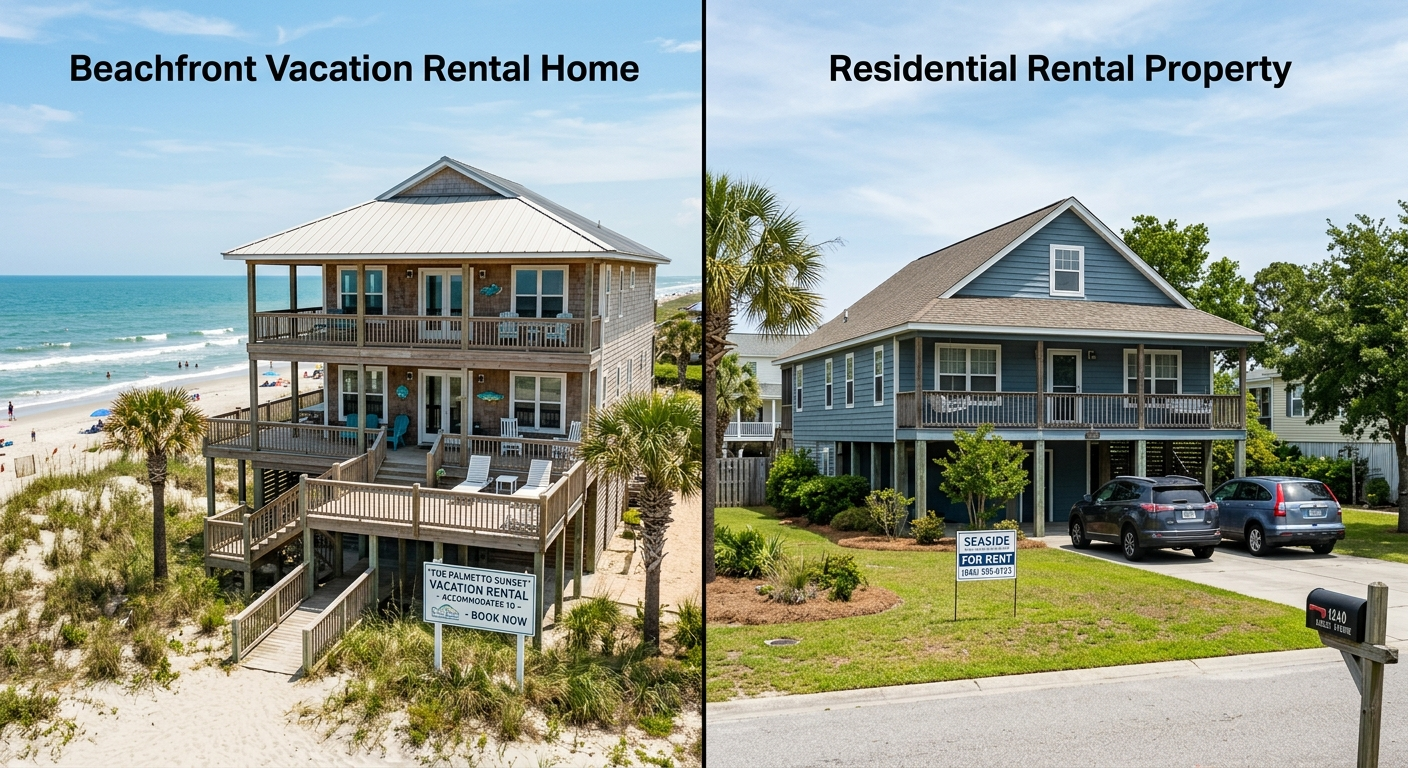
Landlords and property managers operating multiple rental properties, apartment complexes, or short-term rentals in areas like Pawleys Island and Murrells Inlet carry liability exposure from every property they manage. A commercial umbrella that covers general liability and any employer-related exposure across the whole portfolio is usually the right call over a single excess layer tied to one underlying policy.
Professional services
Architects, consultants, and other professionals often carry both general liability and professional liability (errors and omissions) policies. Standard commercial umbrella policies typically do NOT extend over professional liability. This surprises many business owners. If you need higher limits on your E&O coverage, you usually need a separate excess layer written specifically above that policy, not an umbrella. Always confirm with your agent exactly which underlying policies your umbrella follows.
Common questions South Carolina business owners ask
Can I have both an umbrella and an excess policy?
Yes, and it's not unusual. A business might carry a commercial umbrella above its primary GL and auto, then stack an excess policy above the umbrella to reach a very high combined limit required for a specific contract. This layered approach is called excess of umbrella coverage. It's more common in construction, manufacturing, and large hospitality operations than in small businesses, but it's a legitimate structure.
What limits should I carry?
South Carolina does not mandate commercial umbrella or excess liability for most private businesses. The limits you need depend on your industry, your contract requirements, your revenue, and the realistic value of a judgment against you. As a general starting point, think about the worst realistic claim scenario, multiply by two, and treat that figure as a floor for your umbrella limit. A $1 million to $5 million umbrella is common for small to mid-size businesses. Some industries, like construction or healthcare, routinely carry $10 million or more . Your independent agent should walk you through a real exposure analysis, not just recommend a standard limit.
What happens if my underlying policy limits run out?
Once your primary policy's per-occurrence or aggregate limit is exhausted, the umbrella or excess policy kicks in. For a commercial umbrella, this can happen across any of the underlying covered policies. For excess liability, it only triggers when the one specific underlying policy it follows is exhausted. If you've had a bad year with multiple claims that depleted your aggregate, the umbrella's broader drop-down capability becomes especially valuable.
Does a commercial umbrella cover employee lawsuits?
Employment practices liability (EPLI) is typically excluded from standard commercial umbrella policies. If you face a wrongful termination or harassment claim from an employee, your umbrella probably won't respond unless you have a specific endorsement. This is another reason a thorough coverage review matters, rather than a quick online quote.
How to decide which one your business needs
For most small to mid-size businesses in South Carolina, a commercial umbrella is the stronger choice over a standalone excess liability policy. The broader coverage, the drop-down potential, and the ability to cover multiple underlying policies in one product make it better suited to the everyday risks of running a business here.
Excess liability has its place, especially when a contract demands a specific high limit on one policy, or when you need to layer above an existing umbrella to reach a required combined limit. It's also a common tool for large programs where coverage terms need to stay consistent from layer to layer.
The worst outcome is buying whichever option costs less without understanding what you're actually getting. A business that buys excess liability over general liability and then gets hit with a major commercial auto claim above its primary auto limit will find out the hard way that its extra protection didn't extend there at all.
Before you decide, look at every line of liability coverage your business carries, understand where your real exposure sits, and talk through both options with an agent who can pull quotes from multiple carriers and compare the actual policy language, not just the premiums. For additional context on the foundation under these policies, our guide to general liability insurance in South Carolina is a good starting point.
Talk to Moore & Associates about the right coverage for your business
Moore & Associates Insurance is an independent agency serving businesses throughout Myrtle Beach, Georgetown, Conway, Murrells Inlet, Pawleys Island, and across Horry and Georgetown counties. As an independent agency, we work with multiple carriers and compare options on your behalf. We don't push you toward a single insurer or a single product. We look at your whole liability picture and recommend the structure that actually protects your business.
If you're not sure whether a commercial umbrella or excess liability policy is the right fit, or if you want to know whether your current limits make sense for your industry, give us a call at (843) 839-5076 or request a quote online. A conversation costs nothing. A coverage gap at the wrong moment costs everything.
Get A Quote
At Moore & Associates Insurance, securing your future is easy. Ready to protect what matters? Contact us for a quick quote and personalized insurance options!
Kelly
Speak to Kelly 24/7
Microphone ready
Start your custom insurance quote
Instant answers to your insurance questions
Schedule appointments or follow-ups
Personal Insurance
From auto and homeowners to renters and umbrella policies, we help protect your family and property. Let’s find coverage that fits your life.
Commercial Insurance
We customize policies for your industry's risks, like general liability and workers' comp, ensuring you can run your business worry-free.