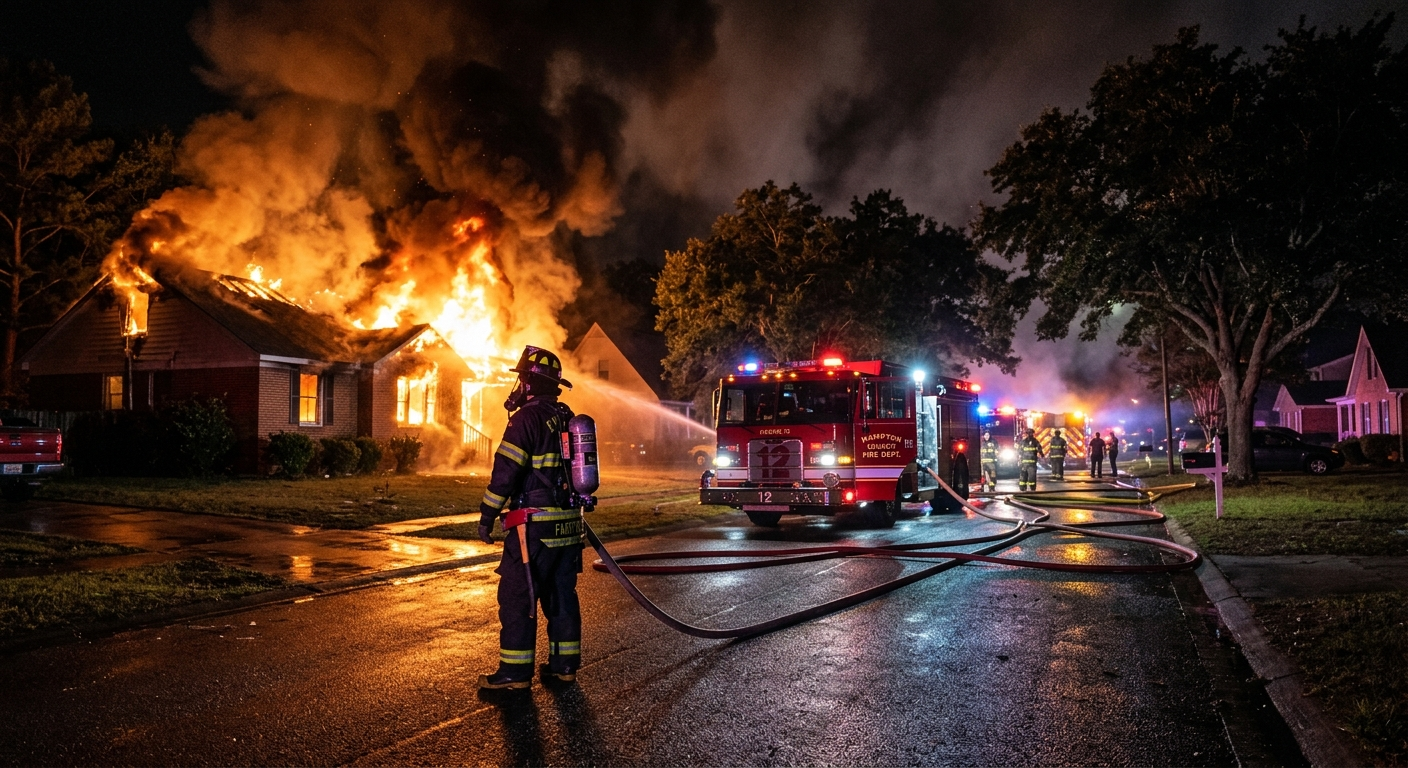
Most renters in South Carolina assume that if something goes wrong in their apartment, the landlord's insurance will cover them. It will not. A landlord's policy covers the building itself. It does not cover your furniture, your electronics, your clothing, your appliances, or any of the other belongings you have accumulated inside that building. If there is a fire, a break-in, or water damage from a burst pipe upstairs, your stuff is your problem unless you have your own renters insurance policy.
This is not an obscure fact or a gotcha — it is how property insurance has always worked. The building owner insures the building. The occupant insures their contents. But because renters insurance is optional in South Carolina and many landlords do not require it, a significant portion of SC renters carry no coverage at all.
Here is what a renters insurance policy actually covers, what it costs in South Carolina, how to choose the right policy for your specific situation, and why the math makes it one of the best values in personal insurance.
Is renters insurance required in South Carolina?
South Carolina law does not require renters insurance. The state imposes no minimum coverage mandate on renters the way it does on drivers for auto insurance.
However, the lease agreement between you and your landlord is a different matter. Many landlords and property management companies in Myrtle Beach and across the Grand Strand require proof of renters insurance as a condition of signing a lease. This is particularly common in newer apartment complexes, professionally managed properties, and larger multi-family developments. The requirement is legally enforceable through the lease, even though it is not mandated by state law.
Even in the absence of a landlord requirement, the case for carrying renters insurance is straightforward. Without it, you bear the full financial exposure for everything you own in your unit — and for any liability that arises from something that happens there. The cost of replacing the average renter's belongings after a fire, theft, or water damage event typically runs $15,000 to $30,000 or more. The cost of defending a liability lawsuit from a guest injured in your apartment can be far higher. Renters insurance addresses both exposures for a premium that most households can absorb without significant financial adjustment.
What does SC renters insurance cover?
Personal property coverage is the core of a renters policy. It pays to repair or replace your belongings if they are damaged or destroyed by a covered event. Covered events typically include fire, smoke, lightning, windstorm, hail, theft, vandalism, and sudden water damage from burst pipes or appliance failures. Make a mental inventory of what you actually own — furniture, mattresses, kitchen equipment, electronics, clothing, books, sporting goods — and total up what it would cost to replace everything. Most people are surprised by how quickly that number reaches $20,000 to $30,000.
Important: standard renters policies cover personal property on a named perils basis, meaning only events specifically listed in the policy are covered. And most renters policies default to actual cash value settlement, meaning depreciation is deducted from what you receive. A five-year-old laptop that cost $1,000 new might settle for $200 under ACV. Replacement cost coverage upgrades the policy so you receive what it costs to buy a comparable item today. The premium difference is usually $10 to $20 per year — almost always worth adding.
Liability coverage protects you if someone is injured in your unit or if you accidentally damage someone else's property. If a guest trips and falls in your apartment, or if a bathtub overflows and causes water damage to the unit below you, your liability coverage responds. Most renters policies start with $100,000 in liability coverage. Many landlords require $300,000 when they mandate renters insurance. Verify your landlord's requirement before selecting a limit.
Loss of use coverage pays for your temporary living expenses if your unit becomes uninhabitable after a covered event. If a fire damages your building and you cannot stay in your apartment for six weeks while repairs are made, loss of use coverage pays for hotel, meals above your normal costs, and other related expenses. This coverage is more valuable in Myrtle Beach than it might appear — hotel rates along the Grand Strand during summer season can exceed $200 per night.
Medical payments coverage handles minor medical expenses for guests who are injured in your unit, regardless of fault. It is typically limited to $1,000 to $5,000 and is designed to cover small claims before they become liability disputes.
What renters insurance does not cover: flooding from outside the building (requires separate flood coverage), earthquake damage, intentional damage, high-value items above sublimits, and your roommate's belongings unless they are specifically listed on the policy. If you have roommates, each person should carry their own renters policy.
Average renters insurance cost in SC (2026)
South Carolina renters insurance typically costs $12 to $20 per month for a policy providing $20,000 to $30,000 in personal property coverage with $100,000 in liability. Annual premium runs roughly $144 to $240 for a standard policy profile.
Myrtle Beach rates sit at or slightly above the state average due to the coastal risk environment. Properties closer to the coast, in older buildings, or in areas with higher theft rates may see higher premiums. The building's construction type also affects renters premiums — concrete and masonry construction rates differently from wood-frame.
The main factors that drive your individual premium are the amount of personal property coverage you select, whether you choose replacement cost or actual cash value settlement, your deductible, your claims history, and your credit score (South Carolina allows insurers to use credit-based insurance scores in pricing).
The math worth considering: for $180 per year, a standard renters policy provides $25,000 in replacement cost coverage for your belongings plus $100,000 in liability protection. No other insurance product comes close to that cost-per-dollar-of-protection ratio. The primary reason people do not carry it is that they have not thought through what they actually own and what it would cost to replace it.
How to choose a policy for your apartment or condo
Start with a home inventory. Walk through your unit and estimate the replacement cost of everything you own. Furniture, bed and bedding, all kitchen equipment and appliances, electronics (television, laptop, phone, gaming systems, speakers), clothing and shoes, books, sporting and outdoor equipment. Most people reach $15,000 to $25,000 before they have covered everything. Set your personal property coverage at or above your realistic inventory total.
Choose replacement cost, not actual cash value. The premium difference between ACV and replacement cost is small — typically $10 to $25 per year. The claims difference can be thousands of dollars. Depreciation on electronics, clothing, and furniture adds up quickly. Replacement cost coverage is almost always worth the marginal premium increase.
Match the liability limit to your landlord's requirement if one exists, and otherwise carry at least $100,000. If you have guests frequently, or if there are features of your unit that create slip-and-fall risk, $300,000 is reasonable and adds minimal premium.
Check sublimits on high-value items. Standard renters policies apply per-category sublimits to jewelry, cash, firearms, collectibles, and electronics. If you own items that exceed those sublimits — an engagement ring, a camera system, a guitar collection — a scheduled personal property endorsement adds specific coverage for those items at their appraised value.
Consider flood coverage if you are on a ground floor. A renters flood policy through the NFIP covers your contents up to $100,000 against flooding. Ground-floor units in Myrtle Beach face real flood exposure from heavy rain events, storm drainage backup, and storm surge during major hurricanes. A renters flood policy typically costs $100 to $300 per year.
Tips to lower your SC renters insurance premium
Bundling your renters policy with auto insurance through the same carrier typically produces a 10% to 20% multi-policy discount — the single most effective way to reduce the cost of either policy.
A higher deductible reduces the premium. Going from a $500 to a $1,000 deductible on a renters policy can save $15 to $30 per year. Only increase the deductible to an amount you can actually pay if you file a claim.
A claims-free history is rewarded by most carriers. Using your policy for small claims — a stolen bicycle or a minor water stain on a rug — can trigger premium increases at renewal that far exceed what you received from the claim. Insurance works best when reserved for losses you genuinely cannot absorb yourself.
Safety features in your unit can generate discounts. Deadbolt locks, smoke detectors, carbon monoxide detectors, and fire extinguishers are standard credit items with most carriers. Some carriers offer discounts for smart home monitoring systems.
Ask your agent specifically what discounts are available. Carriers do not always volunteer every discount. Loyalty discounts, paperless billing credits, and auto-pay discounts are common and not always applied automatically.
Get a free renters insurance quote
Moore & Associates works with renters throughout Myrtle Beach, North Myrtle Beach, Surfside Beach, Conway, Murrells Inlet, and across the Grand Strand. As an independent agency, we compare options from multiple carriers to find you the right policy at the best available rate.
Getting a renters insurance quote takes about ten minutes and the coverage typically starts the same day. Call us at (843) 839-5076, stop by our office at 4707 Oleander Drive in Myrtle Beach, or request a quote at
mooremb.com/contact.
For more on what our renters coverage options include, visit our
Myrtle Beach renters insurance page.