
What flood insurance actually costs in South Carolina
Flood insurance cost in South Carolina is one of the most common questions we hear from homeowners along the Grand Strand, and the answer is almost never simple. Rates vary based on where your home sits, how it was built, which program you use, and how much coverage you need. Skipping flood insurance in a coastal state is a gamble most families cannot afford to lose. A single flood claim can run into the tens of thousands of dollars, and standard homeowners insurance does not cover rising water.
This post breaks down what drives flood insurance premiums in South Carolina, what you can realistically expect to pay, and how to find the best value for your specific situation.
Why flood risk is uniquely high on the South Carolina coast
The Grand Strand runs along one of the most flood-prone coastlines in the southeastern United States. Communities from Myrtle Beach and North Myrtle Beach down through Murrells Inlet, Pawleys Island, and Litchfield face a combination of Atlantic storm surge, tidal flooding, and heavy inland rain that can overwhelm drainage systems even without a direct hurricane hit.
South Carolina averages about 49 inches of rain per year, well above the national average of 30 inches. During active hurricane seasons, a single storm can dump 10 to 15 inches of rain in 24 hours. One detail that catches many homeowners off guard: FEMA data shows that nearly 20 percent of all flood insurance claims come from properties outside high-risk flood zones. Homes rated Zone X (minimal risk) are not immune.
If you want a fuller picture of what South Carolina storm season looks like for homeowners, our post on hurricane season preparedness in SC is a useful companion read.
The two main flood insurance programs and how they price policies
The National Flood Insurance Program (NFIP)
Most flood policies in South Carolina are issued through FEMA's National Flood Insurance Program (NFIP) . In 2021, FEMA launched a new rating methodology called Risk Rating 2.0, which replaced the old zone-based pricing model with one that factors in a property's specific characteristics: distance to water, elevation, foundation type, first-floor height, and the cost to rebuild.
Under NFIP limits, you can purchase up to $250,000 in building coverage and up to $100,000 in contents coverage . Premiums are set by FEMA, not by individual insurers, so the rate for a given NFIP policy is the same regardless of which insurance agency sells it.
Private flood insurance
Private flood insurance has grown significantly in South Carolina over the past several years. Private carriers can offer higher coverage limits (useful for higher-value coastal homes), broader coverage terms, and in some cases lower premiums than NFIP for lower-risk properties. They also tend to have shorter waiting periods than NFIP's standard 30-day waiting period before coverage takes effect.
We covered this comparison in more detail in our post on NFIP vs. private flood insurance in Myrtle Beach, which is worth reading if you are deciding between programs.
Typical flood insurance costs in South Carolina
Precise pricing requires a full application, but here are realistic ranges based on current market data:
- Low-risk Zone X properties: NFIP premiums often run between $400 and $900 per year for a single-family home. Private flood options can sometimes come in lower, around $300 to $700 .
- Moderate-risk AE zone properties (100-year floodplain): NFIP premiums typically range from $900 to $2,500 per year , depending on elevation, foundation type, and coverage levels chosen.
- High-risk VE zone properties (coastal high-hazard areas): These are the beachfront and near-beach homes most exposed to wave action. NFIP premiums can range from $2,500 to $6,000 or more per year . Private flood carriers serve this segment, but pricing depends heavily on how elevated the structure is and its distance from the shoreline.
- Contents-only coverage: Renters and condo unit owners who need to cover personal property (not the building) can purchase NFIP contents-only policies, often in the $200 to $600 per year range.
These figures are reference points. Your actual premium will vary based on the specific factors below.
The biggest factors that determine your premium
Flood zone designation
Your property's FEMA flood zone designation is still one of the dominant pricing signals, even under Risk Rating 2.0. You can look up your property on FEMA's Flood Map Service Center, but flood maps are not always current. Many neighborhoods in Horry County and Georgetown County have seen significant development that has altered drainage patterns.
Elevation
Elevation relative to the Base Flood Elevation (BFE) is perhaps the single most important factor for homes in AE and VE zones. A home elevated two feet above BFE can carry premiums 30 to 50 percent lower than a home built at BFE. This is why an Elevation Certificate, a survey prepared by a licensed land surveyor or engineer, can be a useful document when shopping for flood insurance.
Foundation type
Homes on pilings or elevated foundations generally cost less to insure than slab-on-grade construction in flood zones. This is directly relevant to the Grand Strand, where many beach communities require elevated construction under local building codes.
Building age and construction
Homes built after a community's Flood Insurance Rate Map was adopted (called Post-FIRM construction) are generally priced more favorably than older Pre-FIRM buildings, which were often built without flood-resistant standards.
Coverage amounts and deductibles
Choosing a higher deductible lowers your premium. NFIP offers deductible options ranging from $1,000 to $10,000 for both building and contents. Selecting a $5,000 building deductible instead of $1,000 can reduce your annual premium noticeably, but only makes sense if you have the reserves to cover that gap out of pocket after a loss.
Claims history
Under Risk Rating 2.0, FEMA's pricing model factors in a property's claims history. Repetitive-loss properties (those that have had multiple flood claims) face higher premiums.
Ways to reduce your flood insurance cost
You are not entirely at the mercy of where your home sits. Several steps can meaningfully lower what you pay:
- Get an Elevation Certificate. If your home is in a flood zone and you do not have one, this survey could show that your home sits higher than FEMA's current maps reflect, which translates directly into premium savings.
- Compare NFIP with private market options. Private flood carriers sometimes beat NFIP pricing for lower-risk properties or offer broader terms for higher-value homes that exceed the NFIP's $250,000 building limit. An independent agent can run both quotes side by side.
- Raise your deductible strategically. If you have adequate savings, a higher deductible can reduce your annual premium while still protecting you from a catastrophic loss.
- Participate in the Community Rating System (CRS). Many municipalities along the Grand Strand participate in FEMA's Community Rating System, which gives policyholders discounts based on the community's flood mitigation activities. Myrtle Beach and other Horry County communities have CRS ratings that can provide 5 to 45 percent discounts on NFIP premiums. Check with your agent to confirm your community's current CRS class.
- Install flood vents in enclosed foundations. Properly vented crawl spaces and enclosed areas under elevated homes reduce the hydraulic pressure that floodwater creates, which can lower your rate under NFIP guidelines.
- Buy early. NFIP has a standard 30-day waiting period. If you wait until a named storm is approaching the coast, it is too late. Buying well outside of storm season gives you options.
A few local situations worth knowing about
The Grand Strand has some specific scenarios where flood insurance decisions get complicated:
Condo owners: The condo association's master policy typically covers the building structure, but your individual unit and its contents are your responsibility. A condo unit owner flood policy through NFIP or a private carrier fills that gap. If you own a condo in Myrtle Beach or along the Grand Strand, our condo insurance guide for the Grand Strand goes deeper on this.
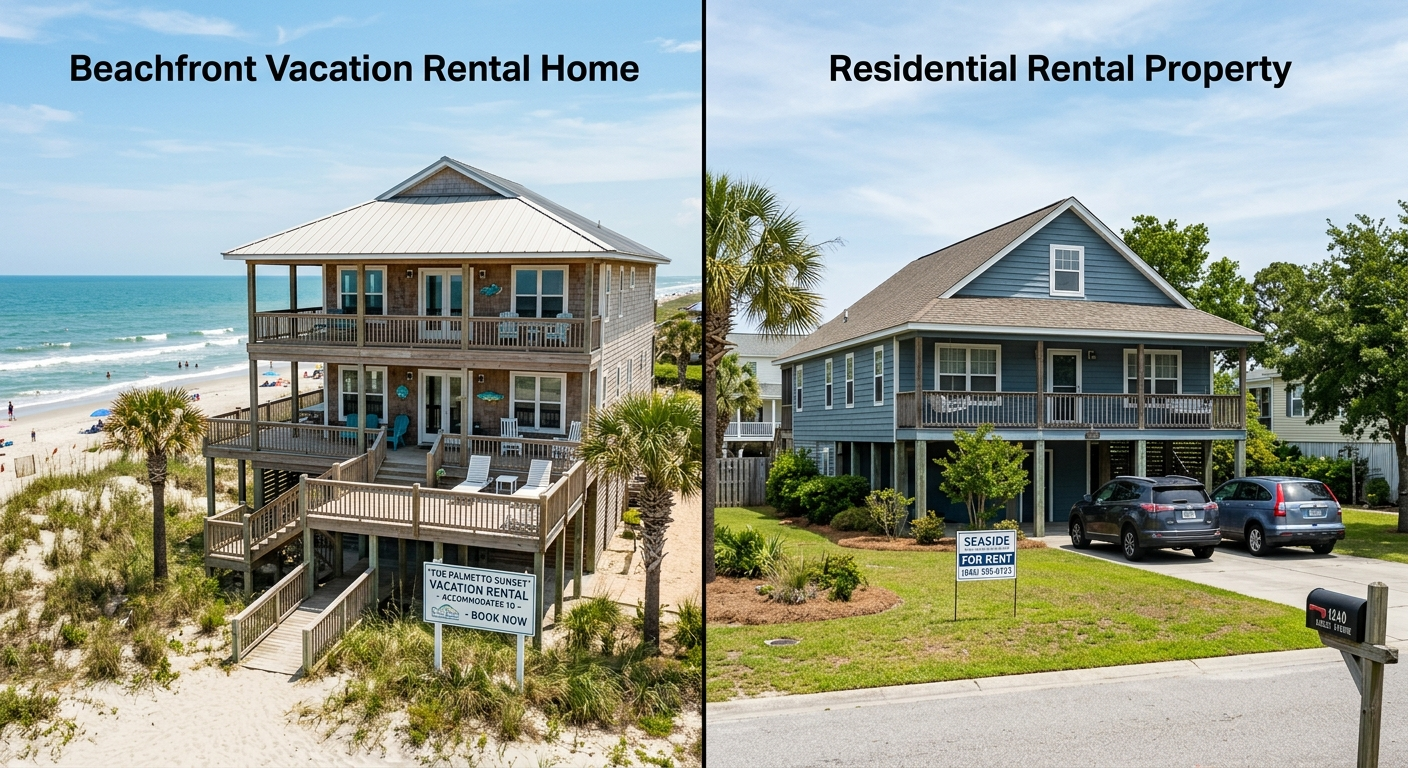
Short-term rental and vacation rental owners: If your coastal property is rented through Airbnb or VRBO, a standard residential flood policy may not be sufficient. Some private flood carriers offer endorsements or standalone policies designed for rental properties.
Conway and inland Horry County: Flooding is not just a beach problem. Conway sits along the Waccamaw River, which experienced historic flooding after Hurricanes Florence (2018) and Dorian (2019). Inland properties that would not traditionally be considered coastal flood risks saw significant damage. If you own property in Conway, our post on flood insurance in Conway, SC covers the specific considerations for that area.
New construction: South Carolina requires flood insurance for federally backed mortgages on properties in Special Flood Hazard Areas (SFHAs). If you are building or buying in a flood zone, your lender will require a policy at closing. Builders Risk insurance covers the structure during construction but does not replace flood coverage.
What flood insurance does not cover
Knowing the limits of your policy matters as much as knowing what it covers. NFIP flood insurance does not cover:
- Temporary living expenses. If your home is uninhabitable after a flood, NFIP does not pay for a hotel or rent while repairs happen. That coverage falls under your homeowners policy, which does not cover flood. Some private flood policies do include limited loss of use coverage.
- Vehicles. Your auto insurance comprehensive coverage handles flood damage to your car, not your flood insurance policy.
- Currency, precious metals, and valuable papers. These are excluded from NFIP coverage.
- Property outside the insured building. Decks, patios, fences, landscaping, and pools are generally not covered.
- Basement contents. NFIP coverage for items stored in basements is limited. Appliances and systems in a basement (HVAC, water heaters, washers, dryers) are covered under the building policy, but furniture and other personal property stored below grade is not.
Get the right flood coverage for your South Carolina home
Flood insurance cost in South Carolina depends on too many property-specific variables for any single number to be reliable without a real quote. What matters most is that you understand your risk, know your options between NFIP and the private market, and work with someone who can compare both for your specific address.
Moore and Associates Insurance is an independent agency serving Myrtle Beach, North Myrtle Beach, Conway, Pawleys Island, and communities throughout coastal South Carolina. Because we are independent, we work with multiple carriers and can compare NFIP with private flood options to find the right fit for your home and budget. We are not tied to any single company, so our job is finding the best value for you.
Call us at (843) 839-5076 or reach out through our contact page to get a flood insurance quote. Do not wait until storm season to find out what your property needs.
Get A Quote
At Moore & Associates Insurance, securing your future is easy. Ready to protect what matters? Contact us for a quick quote and personalized insurance options!
Kelly
Speak to Kelly 24/7
Microphone ready
Start your custom insurance quote
Instant answers to your insurance questions
Schedule appointments or follow-ups
Personal Insurance
From auto and homeowners to renters and umbrella policies, we help protect your family and property. Let’s find coverage that fits your life.
Commercial Insurance
We customize policies for your industry's risks, like general liability and workers' comp, ensuring you can run your business worry-free.