Myrtle Beach homeowners insurance in 2026 looks different from what it looked like in 2019 or even 2021. Premiums are higher. Carrier availability is tighter. Deductible structures are more complex. The combination of active hurricane seasons, rising construction costs, and a shift in how insurers assess and price coastal risk has changed the market significantly over the past several years.
None of this means getting good coverage is impossible. It means homeowners need to understand the market they are operating in, what their policies actually say, and where the gaps are. Assuming that whatever policy renews automatically each year is still the right fit for your property is increasingly risky in this environment.
Here is what makes Myrtle Beach home insurance specifically different, what your coverage should include, what it costs in 2026, and how to approach the market to get the best available result.
What makes Myrtle Beach home insurance unique
Myrtle Beach homeowners insurance starts from a fundamentally different baseline than coverage in most American cities. The combination of hurricane exposure, storm surge risk, Horry County's flood geography, and a specialty insurance market that behaves differently from the standard market creates a coverage environment that requires local knowledge to navigate properly.
The Atlantic hurricane track passes directly over the South Carolina coast. In the past 35 years, the Grand Strand has been hit or significantly affected by Hugo (1989), Floyd (1999), Bonnie and Charley, Frances, Ivan and Jeanne (2004), Matthew (2016), Florence (2018), Dorian (2019), and Idalia (2023). This is not a region that experiences occasional brush-by impacts — it is a region where major storm exposure is a recurring reality that insurance carriers price into every coastal policy.
The standard homeowners market has responded to this reality by contracting. Several national carriers that wrote coastal SC homeowners coverage readily in the 2010s have restricted new business, raised minimums, or exited the market since 2020. The carriers actively writing coastal Myrtle Beach homeowners coverage today include a mix of specialty insurers like Slide Insurance, SageSure, and Orion180 that were either not present or much smaller in this market a decade ago. These carriers understand coastal risk and were built to write it, but they price it accordingly.
The practical implication for homeowners: your coverage options and your premium are more dependent on which carriers your agent can access than in most markets. An agent limited to one carrier or to the standard national market may have genuinely limited options for a coastal Horry County property. An independent agent with access to the specialty coastal market can present meaningfully different coverage and price alternatives.
Wind and hail coverage: a must for Grand Strand homes
Wind and hail are the most frequent and most costly causes of homeowners claims in Myrtle Beach. Understanding exactly how your policy handles them is not optional for coastal property owners.
Most homeowners policies on the SC coast carry a separate hurricane or wind deductible expressed as a percentage of the insured dwelling value. A 1% hurricane deductible on a $350,000 home means $3,500 before the policy pays. A 2% deductible on the same home is $7,000. A 5% deductible is $17,500. These numbers are not hypothetical — they determine how much comes out of your pocket the first time a named storm causes damage to your property.
The trigger matters as much as the percentage. A named storm deductible applies whenever a named tropical storm or hurricane causes the damage. A hurricane-only deductible applies only when a hurricane warning was in effect. A wind and hail deductible applies to any wind or hail event, not just tropical systems. Knowing which trigger applies on your policy tells you when the higher deductible kicks in.
South Carolina homeowners on the coast also need to be aware of the South Carolina Wind and Hail Underwriting Association (SCWHUA), the state's insurer of last resort for wind coverage. Carriers sometimes offer an underlying homeowners policy that excludes wind, requiring SCWHUA coverage for the wind component. This split structure is common in coastal markets but creates complexity in how a combined wind-and-other-damage claim is handled.
Roof age and type directly affect wind coverage. Hip roofs have lower wind damage rates than gable roofs. Metal roofs and impact-resistant shingles qualify for wind premium credits with many carriers. Most carriers restrict coverage or move to ACV settlement on roofs beyond a certain age for coastal properties — often 15 to 20 years. If your roof is in that range, getting a roof inspection and understanding your carrier's current position on it is important to do before a storm rather than after.
Average home insurance costs in Myrtle Beach
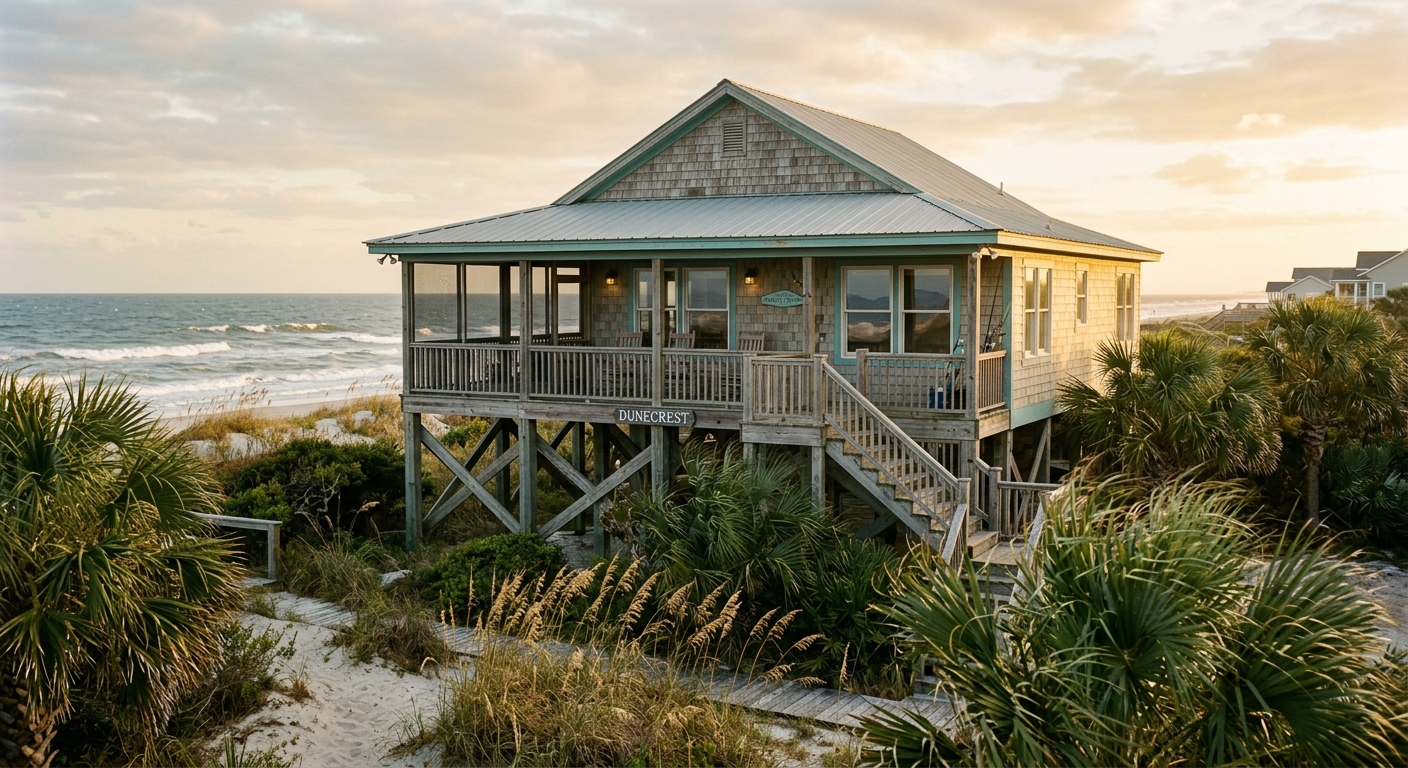
Homeowners insurance in Myrtle Beach typically ranges from $1,500 to $3,500 per year for a standard single-family home with standard coverage amounts. Oceanfront and first-row properties often run above that range, while properties in inland areas like Carolina Forest, Socastee, or the Conway area price closer to inland SC norms.
Premium increases from 2021 to 2026 have been substantial across coastal SC. Most homeowners with long-standing policies have seen cumulative increases of 40% to 60% over that five-year period, driven by cat losses, reinsurance market changes, and carrier repricing of coastal exposure. Some properties with recent claims, aging roofs, or in particularly exposed locations have seen larger increases.
Flood insurance is an additional and separate cost. If your property requires flood insurance, add $700 to $2,000 per year depending on flood zone and elevation — more for VE-zone oceanfront properties.
The most important pricing variable that homeowners control is which carrier writes the policy. The same home can carry premiums that vary by $500 to $1,500 or more annually depending on the carrier. This is not because any one policy is dramatically better or worse — it is because carriers have different risk appetites and pricing models for coastal properties. The spread is wide enough that competitive quoting at every renewal is genuinely worth doing in this market.
Top factors that affect your premium
Location. Flood zone, distance from the ocean and Intracoastal Waterway, zip code, and elevation all feed into how carriers assess and price your property. Oceanfront is the most expensive tier. Properties within a half mile of the coast or a tidal waterway carry elevated risk. Properties in low-lying areas or near drainage systems face higher flood risk regardless of official zone designation.
Home age and construction type. Homes built to post-2007 South Carolina building codes, which include enhanced wind resistance requirements adopted after previous storm seasons, are cheaper to insure than older construction. Homes built before 1994 predate major code improvements and often carry higher wind premiums. Concrete and masonry construction rates differently from wood frame. Knowing when your home was built and whether it includes any mitigation features is relevant when shopping coverage.
Roof condition. In no other market does the roof matter as much as on the SC coast. Age, material, condition, and type all affect premium and insurability. A hip roof with impact-resistant shingles on a ten-year-old home is in a different category from a gable roof with three-tab shingles at eighteen years. If your roof is aging, getting a professional inspection to document its current condition is worthwhile — and proactive replacement before coverage restrictions kick in is often cheaper than the higher premiums and reduced coverage that come with an aging roof.
Claims history. The CLUE report on your property documents claims for seven years. A property with multiple claims can face higher premiums, coverage restrictions, or non-renewal. This affects your purchase decision if you are buying a home as well — ask about the property's claims history before you close, because you will inherit it.
Coverage amount. Insuring to rebuild cost rather than market value is the right approach. These numbers diverge in ways that matter. In a rising real estate market like Myrtle Beach over the past several years, market values have increased sharply while rebuild costs have increased for different reasons (labor, materials, coastal construction premiums). Make sure your dwelling coverage reflects what it would actually cost to rebuild your specific home today.
How to bundle and save
Bundling home and auto insurance with the same carrier typically produces a multi-policy discount of 10% to 25% on one or both policies. On a combined annual premium of $3,500, a 15% discount is $525 in annual savings. For most homeowners who own at least one vehicle, bundling is the most accessible and consistent way to reduce total insurance cost.
Adding a personal umbrella policy on top of home and auto frequently unlocks additional bundling credits. The umbrella policy itself is relatively low cost — typically $150 to $300 per year for $1 million in additional liability coverage — and the discount it triggers on the underlying home and auto policies can substantially offset its cost.
Annual review of your coverage is more important in Myrtle Beach than in most markets. Carrier appetites change, pricing models update, and your personal situation evolves. A home that was correctly insured two years ago may be underinsured if rebuild costs have increased faster than your coverage amount was adjusted. A vehicle that was worth insuring at full coverage may no longer justify that cost as it ages. Building in a coverage review at each renewal rather than treating it as automatic prevents gradual gaps from developing.
Competing quotes at renewal are not disloyal — they are rational. The coastal SC insurance market has enough carrier variation that shopping every renewal takes a few minutes with an independent agent and often produces savings or coverage improvements that automatic renewal misses.
Request your free home insurance quote
Moore & Associates has been insuring Myrtle Beach homes since 1979. As an independent agency, we have access to the specialty coastal carriers — Slide Insurance, SageSure, Orion180, Travelers, Foremost, and others — that write coastal SC homeowners coverage. We compare options across the market at every renewal rather than defaulting to a single carrier.
We serve Myrtle Beach, North Myrtle Beach, Atlantic Beach, Conway, Surfside Beach, Murrells Inlet, Litchfield, Pawleys Island, Georgetown, and the surrounding Grand Strand communities. If your premium has increased significantly at renewal, if you have questions about your coverage, or if you are purchasing a home on the coast and want to understand your insurance options before you close, call us at (843) 839-5076 or visit our office at 4707 Oleander Drive in Myrtle Beach.
Request your custom quote online at
mooremb.com/contact, or visit our
homeowners insurance page for more on what we cover and who we work with.